Kreisumfang Explained: Understanding the Length of a Boundary Line in Geometry
In the fascinating world of geometry, understanding the measurements of shapes is fundamental. One concept that often arises, particularly in the context of circles, is the measurement of its boundary. This idea is elegantly captured by the German phrase
"Länge einer Begrenzungslinie Geometrie" – which literally translates to "length of a boundary line in geometry." While seemingly a simple concept, its most specific and well-known answer, especially when referring to a circle, is "Kreisumfang." This term, which means "circumference" in English, represents the total distance around the edge of a circle.
Far from being a mere theoretical exercise, calculating the Kreisumfang is a practical skill with applications ranging from engineering and architecture to everyday tasks like fitting a belt or measuring the edge of a pizza. This article will delve deep into what Kreisumfang is, explore its fundamental components, teach you how to calculate it, and highlight its significance in both academic and real-world scenarios. By the end, you'll have a comprehensive understanding of this crucial geometric measurement.
What is Kreisumfang? Defining the Length of a Boundary Line
At its core, Kreisumfang is the specific term used in geometry to describe the perimeter of a circle. While "perimeter" is a general term for the total distance around the boundary of any two-dimensional shape (like a square, triangle, or polygon), "circumference" is exclusively reserved for circles and ellipses. Thus, when we talk about the
"Länge einer Begrenzungslinie Geometrie" in the context of a perfectly round shape, we are almost certainly referring to its Kreisumfang.
Imagine drawing a perfect circle on a piece of paper. If you were to take a string and lay it precisely along the edge of that circle, starting and ending at the same point, the length of that string would be the Kreisumfang. It's a one-dimensional measurement that defines the "length" aspect of a two-dimensional circular boundary. This concept is vital because it allows us to quantify the outer extent of circular objects, which are ubiquitous in our environment.
The consistency and predictability of a circle's shape make its circumference uniquely amenable to precise mathematical calculation, unlike irregular shapes which might require more complex methods to determine their boundary length. This inherent simplicity, combined with its widespread presence, cements Kreisumfang's status as one of geometry's most foundational and useful concepts. For those curious about the exact term often used in geometry puzzles, you might find more insights by exploring
Unraveling "Länge einer Begrenzungslinie": The 11-Letter Geometry Answer.
The Essential Components: Radius, Diameter, and Pi (π)
To understand and calculate the Kreisumfang, we must first grasp three critical elements that define every circle: the radius, the diameter, and the universal mathematical constant, Pi (π). These components are inextricably linked and form the bedrock of circumference calculations.
The Radius (r)
The
radius (often denoted by 'r') of a circle is the distance from its absolute center to any point on its boundary. Think of it as the spoke of a wheel, extending from the hub to the tire. Every point on the circle's edge is equidistant from the center, and that distance is precisely the radius. It's a fundamental measurement because it defines the "size" of the circle. A larger radius means a larger circle.
The Diameter (d)
The
diameter (often denoted by 'd') is the distance across the circle, passing directly through its center. It connects two points on the circle's boundary and always bisects the circle. Crucially, the diameter is always twice the length of the radius (d = 2r), or conversely, the radius is half the diameter (r = d/2). If you know one, you can easily find the other. The diameter represents the widest possible straight line that can be drawn within a circle.
Pi (π)
Perhaps the most famous mathematical constant,
Pi (π), is an irrational number that represents the ratio of a circle's circumference to its diameter. No matter the size of the circle – from a tiny bead to a massive planet – if you divide its circumference by its diameter, you will always get the same value: Pi.
Pi is approximately 3.1415926535... and its decimal representation goes on infinitely without repeating. For most practical calculations, people use approximations like 3.14, 3.1416, or the fraction 22/7, though using the π symbol on a calculator provides the highest accuracy. The discovery and understanding of Pi are ancient, dating back to civilizations that realized this remarkable relationship between a circle's boundary and its interior dimensions. It is the magical constant that binds the radius, diameter, and Kreisumfang together.
Calculating Kreisumfang: Formulas and Examples
With a clear understanding of radius, diameter, and Pi, we can now explore the simple yet powerful formulas used to calculate Kreisumfang. There are two primary formulas, both yielding the same result and derived from the definition of Pi itself.
The definition of Pi states: $\pi = \text{Circumference} / \text{Diameter}$
From this, we can rearrange to find the circumference:
1.
Using the Diameter: C = πd
This formula is straightforward: the Kreisumfang (C) is equal to Pi multiplied by the diameter (d).
Example 1:
A circular table has a diameter of 1.2 meters. What is its Kreisumfang?
Given: d = 1.2 m
Formula: C = πd
Calculation: C ≈ 3.14159 * 1.2 m ≈ 3.7699 meters
So, the Kreisumfang of the table is approximately 3.77 meters.
2.
Using the Radius: C = 2πr
Since the diameter (d) is equal to twice the radius (2r), we can substitute '2r' for 'd' in the first formula, giving us C = π(2r), which is conventionally written as C = 2πr.
Example 2:
A hula hoop has a radius of 0.45 meters. What is its Kreisumfang?
Given: r = 0.45 m
Formula: C = 2πr
Calculation: C ≈ 2 * 3.14159 * 0.45 m ≈ 2.8274 meters
So, the Kreisumfang of the hula hoop is approximately 2.83 meters.
Remember to always include the appropriate units (e.g., meters, centimeters, inches) in your final answer, as Kreisumfang represents a length. Precision for Pi should be chosen based on the required accuracy of your calculation. For more insights on this specific geometric concept, you might want to read
Crossword Clue Solved: "Länge einer Begrenzungslinie" in Geometry.
Beyond Circles: Kreisumfang's Role in Geometry and Real Life
Understanding Kreisumfang isn't just about solving geometry problems; it's about appreciating its pervasive presence and utility across various fields.
Perimeter vs. Circumference: A Clarification
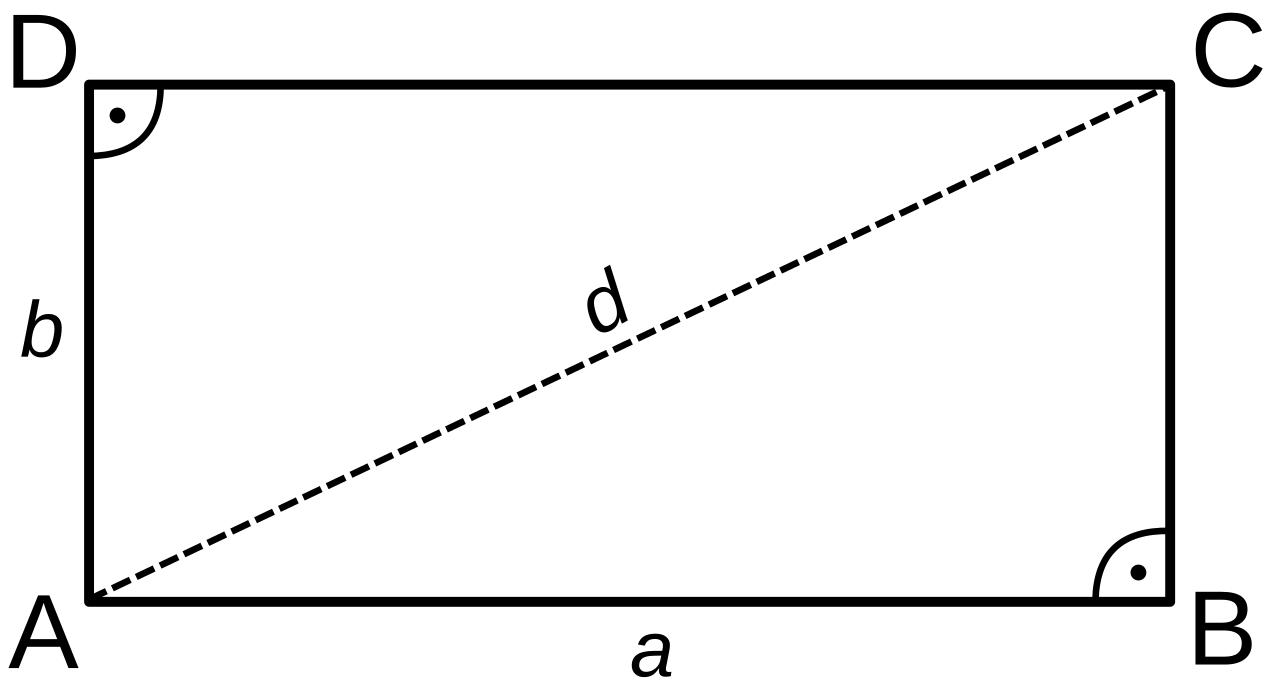
While Kreisumfang is the length of a boundary line for a circle, it's helpful to reiterate its distinction from the more general term, "perimeter." The perimeter is the total distance around any closed two-dimensional shape. For a square with side length 's', the perimeter is 4s. For a rectangle with length 'l' and width 'w', the perimeter is 2(l+w). For polygons, it's the sum of all side lengths. Circumference is simply the perimeter of a specific and universally recognized shape: the circle. This distinction highlights the unique properties that make circles so special in geometry.
Practical Applications
The calculation of Kreisumfang is indispensable in countless real-world scenarios:
*
Engineering and Manufacturing: From designing gears and wheels for machinery to calculating the amount of material needed for circular pipes or cables, circumference is a fundamental measurement. The precise fitting of parts often depends on accurate Kreisumfang calculations.
*
Architecture and Construction: Architects planning circular buildings, domes, or even decorative circular elements need to calculate their circumference for material estimation and structural integrity.
*
Sports: Running tracks are designed with precise circular or semi-circular sections, where the length of the track is determined by circumference calculations. Measuring the size of a basketball hoop or a dartboard also involves this concept.
*
Everyday Life: Ever wondered how much trim you need for a round mirror? Or the length of weather stripping for a circular window? Perhaps determining how much frosting is needed to go around the edge of a round cake. Even sizing bicycle tires or a watch strap requires an understanding of circumference.
*
Astronomy: Calculating the orbital path of planets or satellites often involves principles derived from the circumference of ellipses (a more general form of a circle).
Connection to Other Geometric Concepts
Kreisumfang is also a foundational concept for understanding other complex geometric ideas. For instance, the formula for the area of a circle (A = πr²) is intrinsically linked to its radius, which also dictates its circumference. Furthermore, in three-dimensional geometry, understanding the circumference of a circle is crucial for calculating the surface area and volume of shapes like cylinders (where the base is a circle) or spheres (where circles are cross-sections).
Conclusion
The concept of Kreisumfang, or circumference, is a cornerstone of geometry, offering a precise way to measure the length of a circular boundary. While initially encountered as the answer to the crossword clue
"Länge einer Begrenzungslinie Geometrie," its significance extends far beyond puzzles. We've explored how it's defined by the unique relationship between a circle's radius, diameter, and the mystical constant Pi. The simple formulas C = πd and C = 2πr provide powerful tools for calculation, enabling us to quantify circular boundaries with remarkable accuracy.
From the intricate mechanisms of machinery to the grand designs of architecture and the simple act of measuring a tire, Kreisumfang plays an indispensable role in shaping our understanding and interaction with the physical world. Mastering this concept not only enhances your geometric literacy but also equips you with a practical skill applicable in countless scenarios. The next time you encounter a circle, remember that its boundary holds a precise and predictable length, calculable thanks to the elegant principles of Kreisumfang.